Nov 16, 2026 · @Ping Network
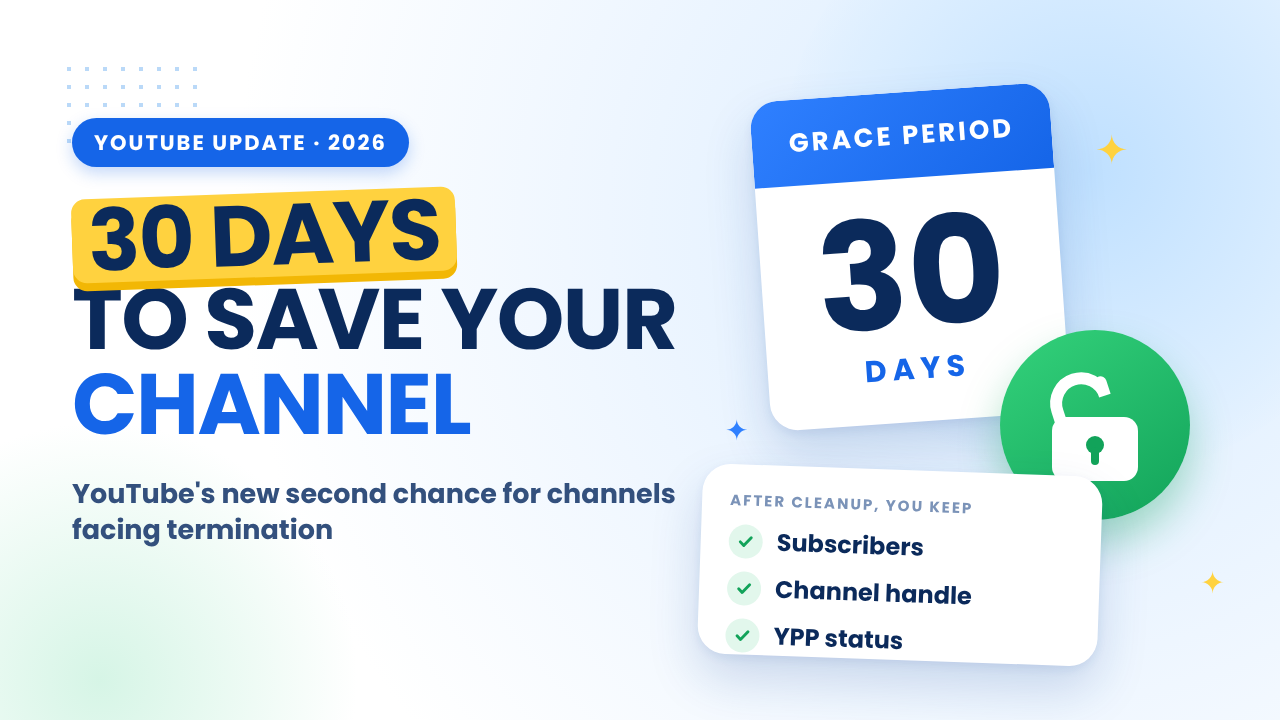
YouTube is officially testing a 30-day grace period for channels facing termination over spam policy violations. Instead of deleting an eligible channel straight away, YouTube now locks it and gives the creator 30 days to fix the problem. Team YouTube, YouTube’s official support team, announced this test on 29 October 2026 in the “YouTube test features and experiments” post on the YouTube Help Community. It applies only to some channels facing immediate termination under certain spam policies, so it is not a platform-wide change yet.
For creators, the important part is what survives. A channel that chooses the remove-all-videos route during the 30 days keeps, according to YouTube, its subscribers, its handle and its YouTube Partner Program (YPP) status. YouTube has not said the same for a targeted cleanup. Until now, a spam termination usually meant losing all of that at once, with an appeal as the only way back. This article explains how the new process works, what each option really costs you and what to do if the notice lands in your inbox.
How did spam terminations work before this?
YouTube’s spam, deceptive practices and scams policies cover things like artificially inflating views or engagement, comment spam, misleading metadata and repetitive or mass-produced uploads. Most violations go through the familiar warning and strike system, where three strikes within 90 days can end a channel. Some spam cases, however, skip that ladder entirely. When YouTube judged a channel to be built around spam, it terminated the channel immediately.
An immediate termination was total. Every video, every subscriber, all the comments and the channel’s earnings went with it. The creator’s only option was to appeal and hope the decision was reversed. For a channel that had grown for years and then slipped up with a batch of reused clips or misleading titles, that was a very heavy price for a problem that was sometimes limited to a few videos.
What is the 30-day locked period?
Under the test, an eligible channel is not terminated. It is locked for 30 days. YouTube tells the owner by email and through a notice in YouTube Studio on desktop, and, according to third-party reports, the notice names the spam policy involved and the locked period. That wording matters, because it tells you the channel still exists and can still be saved.
While the channel is locked, it is effectively frozen. You cannot upload new videos or post comments, and other actions are restricted too. Your publishing schedule stops for as long as the lock lasts. That is why speed matters: the lock lifts only when you resolve the problem, not when you wait it out.
If the 30 days pass and nothing has been fixed, or you simply do not act, YouTube goes ahead with the termination. The grace period postpones the termination. It does not cancel it.
What are your options during the lock?
YouTube gives you three ways out of the lock. They suit different situations, and choosing well depends on how much of your library is actually at fault.
Fix or remove only the flagged videos
The first option is a targeted cleanup. You use YouTube Studio’s tools, including the built-in editor, to edit out the parts that break the policy, or you delete the specific uploads YouTube has flagged. This keeps everything else on the channel intact, which makes it the obvious choice when the problem is limited to a handful of videos.
The catch is that the cleanup has to pass review before the lock lifts. In YouTube’s words, once violative content is removed and passes review, your channel will be unlocked. Removing a video does not unlock the channel on the spot. If YouTube decides you missed something, the channel stays locked and the clock keeps running. So be thorough the first time and look beyond the videos YouTube named, at titles, descriptions, thumbnails and tags as well.
Delete every video on the channel
The second option is a full reset. You remove all the videos you have uploaded, and the channel unlocks immediately, with no review wait. YouTube says creators who take this route can start fresh while keeping their subscribers, channel handle and YPP status. You can use it at any point in the 30 days, including after a selective cleanup has failed review.
This option is quick but expensive. Your back catalogue, its watch time and the long-tail views and revenue it was earning are gone. For a channel whose whole library follows the same problematic format, such as compilations of reused clips, it may be the more realistic choice. For a channel with years of original work and only a few bad uploads, it should be the last resort. It is also why viewers may now notice channels in their subscriptions that suddenly show zero videos without having been banned.
Appeal the decision
The third option is the one that has always existed. If you believe YouTube has wrongly flagged your channel, you can appeal. An appeal argues that the termination was a mistake, while the other two options accept the finding and fix it. Choose this only when you are confident the content does not break the spam policies, and keep the 30-day deadline in mind while the appeal is pending. YouTube has not said whether the clock pauses during an appeal, so do not assume that it does.
Who is eligible, and what is still unclear?
YouTube calls this an experiment for eligible channels and has not said which countries are included or what makes a channel eligible. It covers only certain spam policy violations. Terminations for copyright, for Community Guidelines strikes or for other serious policy breaches still follow the existing rules.
YouTube has also not said whether, or when, the test will become a permanent feature for everyone. For now, plan as if your channel could still be terminated outright for spam. The 30-day lock is a safety net some channels will get, not a right every channel can count on.
Is this the same as YouTube’s “Second Chance” programme?
No, and the two are easy to confuse. In October 2025, YouTube launched a separate pilot, also called Second Chance, for creators whose channels had already been terminated. Under that programme, an eligible creator can request permission to open a new channel one year after termination. The new channel starts from zero, with no old videos, subscribers or monetisation carried over. The pilot excludes creators terminated for copyright infringement or under YouTube’s Creator Responsibility policies.
The 30-day test works the other way round. It steps in before the termination happens and lets you keep the same channel, with its audience, handle and YPP status. The older programme helps creators rebuild somewhere new. The new test tries to make sure some creators never have to.
What should you do if you receive the notice?
Start by reading the notice carefully and confirming what it is. A spam lock names the spam policy and a 30-day locked period. A pause on a hacked channel looks different and calls for a different response. Note the date the lock started, because your 30 days begin then.
Next, work out honestly why YouTube flagged the channel. Look at the videos it names, then look for the same pattern across the rest of your library, such as reused footage with little commentary, near-identical uploads, misleading titles or thumbnails, or bought views. YouTube has to judge the cleanup as complete, so fixing only the obvious cases and leaving similar ones up is the most likely way to fail review.
Then choose your route based on how much of the channel is affected. If the problem is limited to a few videos, a targeted cleanup protects the rest of your catalogue. If most of the library shares the same format, a full reset may be faster and more certain than a cleanup that fails review on day 25. Before you delete anything, download a copy of your videos and note which ones earned the most, so you keep a record of what you are giving up.
It is worth getting expert help early in the 30 days rather than near the end. Every cleanup that fails review uses up days you cannot get back, and YouTube does not tell you in advance exactly what it will accept. Someone who works with spam policy cases regularly, such as your MCN partner or a YouTube policy specialist, can review your library, spot the patterns YouTube is likely to treat as spam and help you choose between a targeted cleanup and a full reset. The aim is to get the cleanup right the first time, while you still have time left to change course if needed.
Finally, once you are unlocked, change the habit that caused the lock. YouTube has not said whether a channel can receive the grace period more than once, so do not count on a second one.
Frequently asked questions
Does deleting all my videos really keep my monetisation?
es. YouTube says creators who remove all their videos keep their subscribers, channel handle and YPP status. Your earnings from the deleted videos stop, though, so your income will drop until you build a new library.
Can I try a selective cleanup first and delete everything later?
Yes. The full reset can be used at any point in the 30 days, including after a selective cleanup has failed review.
Will my channel be visible while it is locked?
Probably not. Some reports say a locked channel is taken off public view, but YouTube has not said so itself. The channel is not deleted, and you cannot upload or comment. It returns to normal once the lock lifts, either after your cleanup passes review or straight away if you delete all your videos.
Does this apply to copyright strikes or Community Guidelines strikes?
No. The test covers only certain spam policy violations. Terminations for other reasons, such as copyright strikes or Community Guidelines strikes, still follow YouTube’s existing process.
Is this available to every channel?
Not yet. It is an experiment for eligible channels, and YouTube has not published the eligibility criteria or a date for a wider rollout.
Why expert guidance makes the difference
A 30-day lock leaves very little room for trial and error. YouTube does not publish exactly what its reviewers will accept, and every cleanup that fails review uses up days that cannot be recovered. In our experience, creators who work through it alone often make one of two costly mistakes: they remove too little and fail review, or they delete far more than necessary and lose a back catalogue that was still earning.
Specialists who handle policy cases every day can spot patterns that are hard to see in your own content. They can identify which policy has most likely been triggered, which videos and metadata need attention, and whether a targeted cleanup or a full reset is the right route for your channel. No one can guarantee YouTube’s decision, but expert guidance can improve your chances of resolving the lock on the first attempt, with time to spare.
Ping Network is a YouTube Certified Enterprise Partner with more than 12 years of experience supporting creators through policy flags, strikes and channel restrictions. If your channel has entered a locked period, or you would like your library reviewed before it reaches that point, our team of content experts can assess your channel and recommend a clear course of action. Write to Dhaval Ashar at dhaval.ashar@pingnetwork.in with your channel link, and our team will get in touch.